
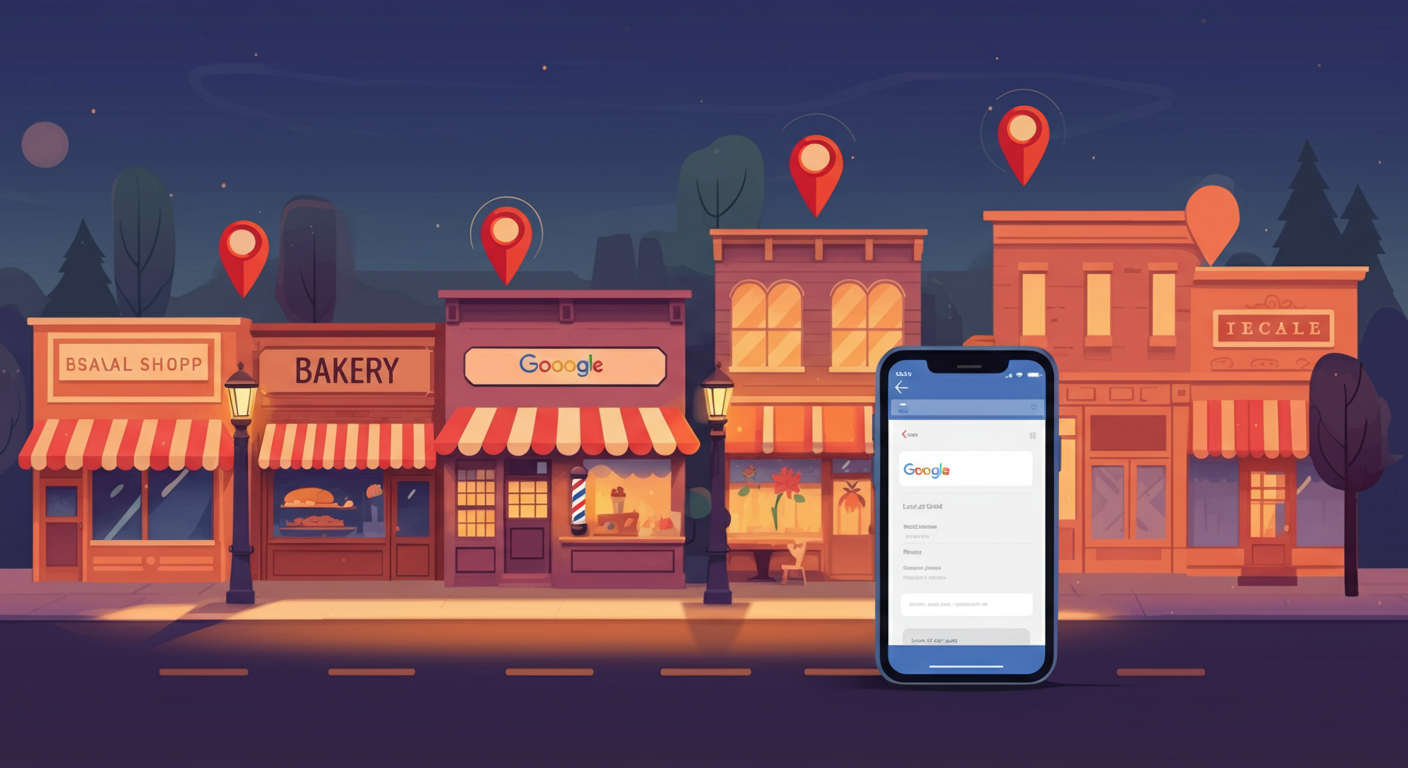
When someone nearby searches for "best coffee shop near me" or "plumber in [your city]," local SEO determines whether your business appears — or gets buried. For small businesses, local search is one of the highest-return marketing channels available. Unlike broad SEO campaigns that compete globally, local SEO lets you win in your own backyard.
What Is Local SEO?
Local SEO (Search Engine Optimization) is the practice of optimizing your online presence so that your business appears prominently in location-based search results. This includes the Google Map Pack (the three local listings that appear at the top of many searches), organic results with local intent, and voice search queries like "open now near me."
Local SEO differs from traditional SEO in a few key ways. It relies heavily on proximity signals, your Google Business Profile, and the consistency of your business information across the web. The good news: with focused effort, small businesses can outrank large national chains in local results.
Optimizing Your Google Business Profile
Your Google Business Profile (GBP) is the single most important asset in local SEO. It powers your appearance in Google Maps and the local pack. Claiming and fully optimizing it is non-negotiable.
Here's what a fully optimized GBP looks like:
- Business name, address, and phone number (NAP) that exactly match your website
- Accurate business category (primary and secondary)
- Complete business hours, including holiday hours
- A keyword-rich business description (up to 750 characters)
- High-quality photos of your storefront, interior, team, and products
- Regular Google Posts to share offers, events, and updates
- Products or services listed with descriptions and pricing
Google rewards completeness and activity. Profiles that are regularly updated with posts, photos, and Q&A responses tend to rank higher than stale, incomplete listings.
Local Citations and NAP Consistency
A local citation is any online mention of your business's Name, Address, and Phone number — collectively known as NAP. Citations appear on directories like Yelp, Yellow Pages, TripAdvisor, and industry-specific platforms. They serve as trust signals: the more consistently your NAP appears across the web, the more confident Google is that your business is legitimate.
Why NAP Consistency Matters
Even small discrepancies — "St." vs. "Street," a missing suite number, or an old phone number — can confuse search engines and erode your local ranking. Audit your existing citations using tools like BrightLocal or Moz Local, and correct any inconsistencies you find.
Where to Build Citations
- Core directories: Google Business Profile, Apple Maps, Bing Places, Facebook
- General directories: Yelp, Yellow Pages, Foursquare, Angi
- Industry-specific directories: Houzz (home services), Healthgrades (medical), Avvo (legal)
- Local directories: your city's Chamber of Commerce, local news sites, neighborhood blogs
Getting and Managing Customer Reviews
Reviews are one of the most powerful local ranking factors — and they directly influence whether potential customers choose you over a competitor. A steady stream of genuine, positive reviews signals to Google that your business is trusted and active.
How to Earn More Reviews
- Ask at the right moment — right after a successful service or purchase, when satisfaction is highest
- Make it easy — share a direct link to your Google review page via text, email, or a QR code at your counter
- Train your team — make asking for reviews a natural part of the customer experience
- Follow up — a polite post-visit email or SMS reminder can significantly increase review volume
Equally important: respond to every review, positive or negative. Thoughtful responses show prospective customers that you care, and they give you another opportunity to naturally include local keywords.
Building a Local Keyword Strategy
Local keywords combine what people are searching for with where they're searching from. The formula is simple: service + location. Think "emergency electrician Austin TX" or "organic bakery Brooklyn." But effective local keyword strategy goes deeper than just appending a city name.
Types of Local Keywords to Target
- Geo-modified keywords: "[service] in [city]" or "[service] near [neighborhood]"
- "Near me" keywords: these are resolved by Google based on the searcher's location
- Landmark-based keywords: "dentist near [local landmark or district]"
- Service-area keywords: if you serve multiple towns, create dedicated pages for each
Use tools like Google Keyword Planner, Semrush, or Ahrefs to research search volume and competition for your target keywords. Focus on terms with clear local intent and realistic ranking potential for a new or growing site.
On-Page Local SEO Tips
Your website is the foundation of your local SEO strategy. Even the best Google Business Profile won't compensate for a website that fails to communicate your location and services clearly to search engines.
Key On-Page Optimizations
- Include your city and service in the page title tag and H1 heading
- Embed a Google Map on your contact page
- Add LocalBusiness schema markup (structured data) to help Google understand your NAP, hours, and service area
- Place your NAP in the footer of every page — and make sure it matches your GBP exactly
- Create location-specific landing pages if you serve multiple areas
- Write locally relevant blog content — covering community events, local guides, or neighborhood-specific tips
- Ensure your site is mobile-friendly and loads quickly — most local searches happen on mobile devices
Putting It All Together
Local SEO isn't a one-time project — it's an ongoing practice. Start with the fundamentals: claim and optimize your Google Business Profile, audit your citations for consistency, and make sure your website clearly communicates who you are and where you operate. Then layer in review generation, local content, and keyword-targeted pages over time.
The businesses that win locally aren't always the biggest — they're the most visible, the most trusted, and the most relevant to their community. With consistent effort, local SEO can become your most reliable source of new customers.